8 July 2026 · 2 min read
By Julliette Wiedemann
Does Photo or AI Color Analysis Really Work?
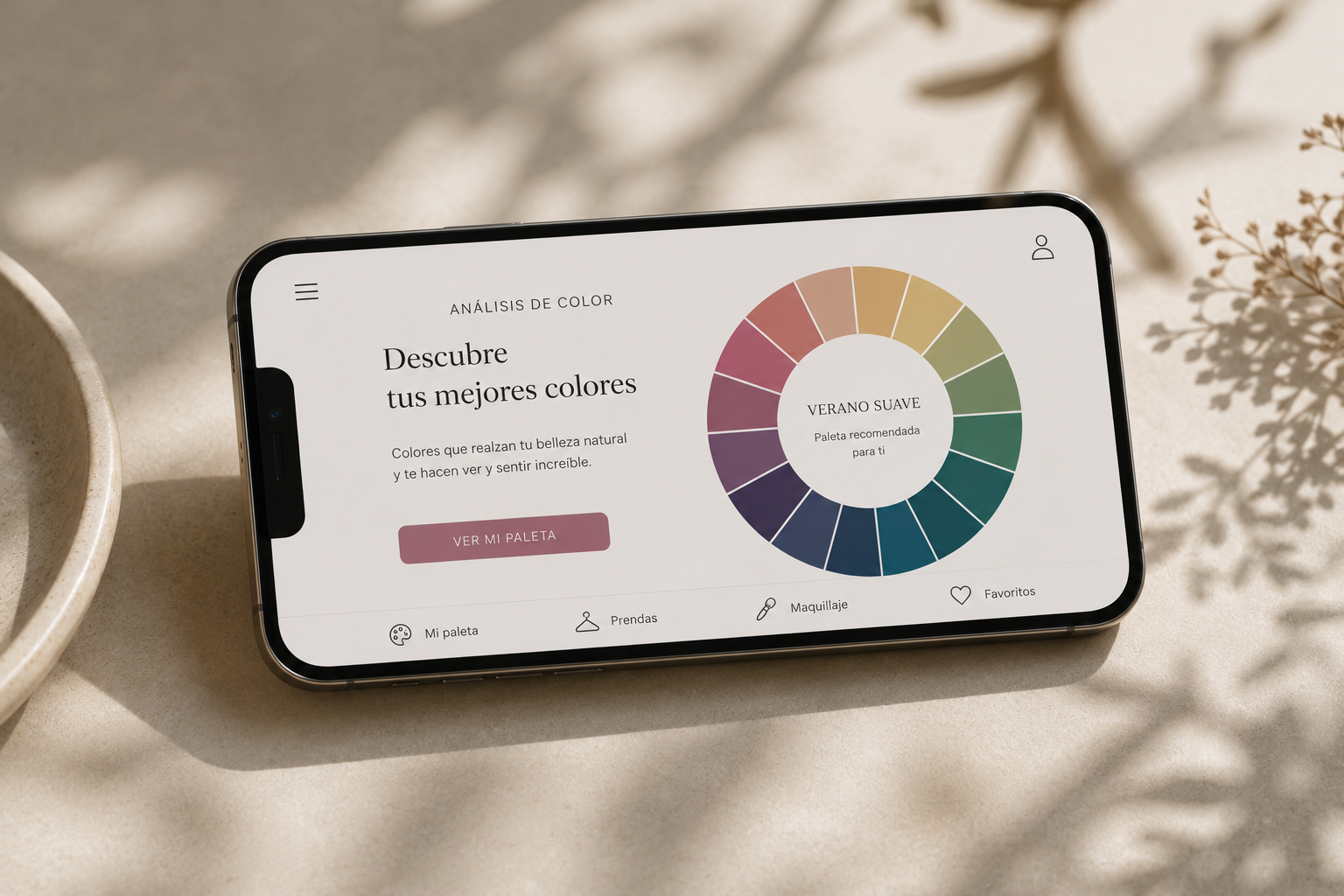
Photo or AI color analysis can offer a useful first hypothesis, but it cannot reliably reproduce an in-person comparison with fabric. Camera processing, lighting, white balance, filters, makeup, and screens alter color. An app can help you explore, but it should not present its output as a definitive diagnosis.
Digital tools are appealing because they return an answer quickly. The problem is not using them; it is confusing an automated classification with controlled observation of how several colors interact with your face in real time.
What a digital tool can do
Help you explore color families and possible combinations.
Approximate contrast levels from a carefully made photograph.
Offer a starting point for reviewing your closet.
Simulate clothes or makeup before purchase.
Give you vocabulary for better questions in a professional session.
What one photograph cannot verify well
The real reflected-light effect of fabric on skin.
Subtle changes in shadows, texture, under-eye areas, and facial definition.
Whether the phone automatically changed exposure or temperature.
The result of comparing neighboring colors in sequence.
The difference between natural coloring and filters, dye, or makeup.
Why two photos produce opposite results
Window light can make skin appear warmer; a front camera may cool and soften it; a bulb can add yellow; a screen may oversaturate it. Even walls and shirts reflect color toward the face. When the input changes, the automated result changes too.
How to test an app honestly
Photograph yourself from the front in indirect natural light.
Remove filters, strong makeup, colored lenses, and saturated clothes near the face.
Use several photographs taken on different days.
Compare the suggestion with real clothes you already understand.
Treat the result as a hypothesis, not a shopping rule.
In-person draping is different
In person, fabrics are placed successively beneath the face while conditions stay stable. The comparison—not an RGB reading of skin—is the evidence. You can also ask questions, connect the result to makeup, and learn how to use colors outside the primary palette.
The Palette lasts two and a half hours, costs COP 550,000, and includes draping, a digital palette, and a dossier. The practical explanation is the difference between receiving a label and developing judgment.
Questions people ask
Can a free app be right?
Yes, especially in a clear case with a controlled photograph. One correct result does not remove the method's limitations.
Will AI replace the consultant?
AI can accelerate simulation and organization, but it cannot physically observe fabric or understand your entire identity and routine.
Can I buy makeup from a digital result?
Use it to narrow choices, then test the product on your skin under more than one light.
What if I already paid for a virtual analysis?
Keep what works, review the evidence, and identify what remains uncertain. A useful result should create clarity rather than anxiety.
Technology can help you explore. Good judgment begins by knowing when you are seeing an approximation and when you are observing evidence.